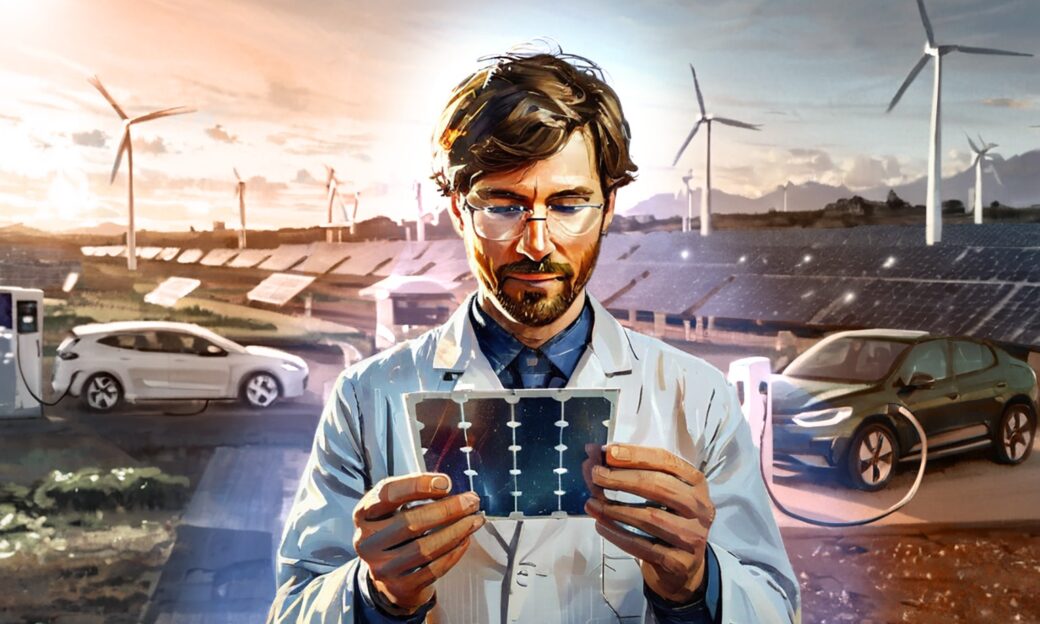
The transition towards more sustainable energy requires breakthroughs in polymeric materials that enable electrification, energy storage, and the safe transport of alternative energy sources. The Polymers for energy transition programme focuses on fundamental research that enhances the performance, durability, and efficiency of polymers used for energy related applications.
This programme drives scientific advancements in the following key areas:
- Next-generation energy storage materials: developing next-generation materials for high-energy storage and safe energy conversion.
- Polymers for electric vehicles and electronics: understanding and predicting the thermo-electrical ageing of polymer materials as well as their flame retardancy behavior.
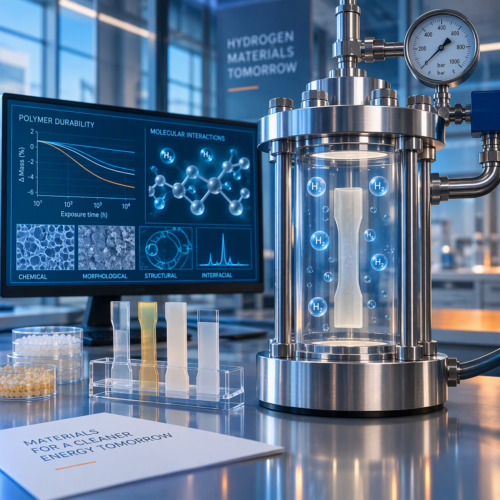
- Polymers in hydrogen environments: investigating barrier properties, mechanical integrity, and long-term durability of polymers in hydrogen applications.
By deepening our understanding of polymer behaviour under demanding environmental conditions related to energy applications this programme supports DPI’s industrial partners in designing and utilising the future materials that will contribute to sustainable energy transitions.
Key research areas and active projects
The Polymers for energy transition programme bridges fundamental materials science with energy-related industrial challenges. Below are key projects driving innovation in energy-efficient polymers:
Next-generation energy storage materials
Recyl-FR
Understanding complex and competing phenomena in recycled flame-retardant polymers, with a focus on glass fibre reinforcement.
SEEEBAT
Developing solid-state batteries with succinonitrile-based electrolytes, enabling higher energy density and safety.
View websitePolymers for electrical vehicles and electronics
ITEPOC
With the ever-increasing utilisation of polymers and polymer composites in many electronic components, devices and power systems, this project contributes to the fundamental understanding of polymeric materials.
View websiteMEAPP
Investigating the mechanisms of electrical ageing caused by structural defects in high-performance polymer materials, improving long-term reliability.
TEAMs
Studying thermo-electrical ageing mechanisms in polymer-ceramic nanocomposites, crucial for energy storage applications.
MOPLCTE
Developing melt-processable, optically transparent polyimides with low thermal expansion coefficients, improving thermal stability in electronics.
Polymers in hydrogen environments
CharMPol
Characterising and modelling high-performance polymers for gas barrier applications, essential for energy transportation.
RADHY
Investigating rapid gas decompression failure in polymers and composites, critical for high-pressure hydrogen storage.
H2-DuraPol
Assessing the effect of hydrogen exposure on the durability of polymeric materials, supporting hydrogen-based applications.
View websiteBoost your R&D with DPI
By joining the DPI community, you gain access to world-class polymer research, high-impact collaborations, and a strategic voice in shaping the future of energy materials.
Interested in collaborating? Let’s explore the possibilities:

Denka Hristova-Bogaerds
Chief programme officer
Partners driving energy innovation

























































Latest updates
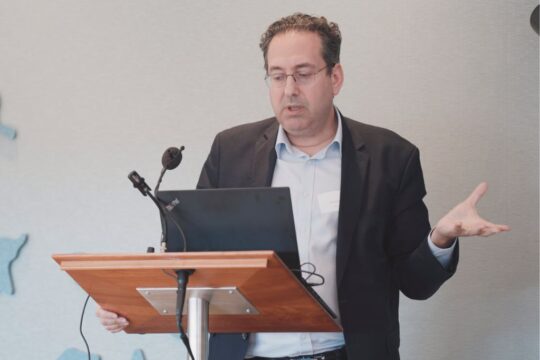
High-performance polymers: the key to sustainable innovation
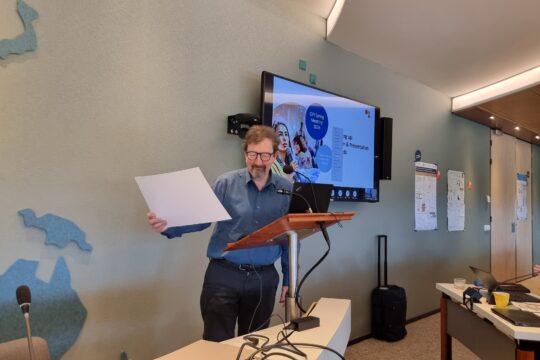
AI in polymer science: why interdisciplinary teams are key
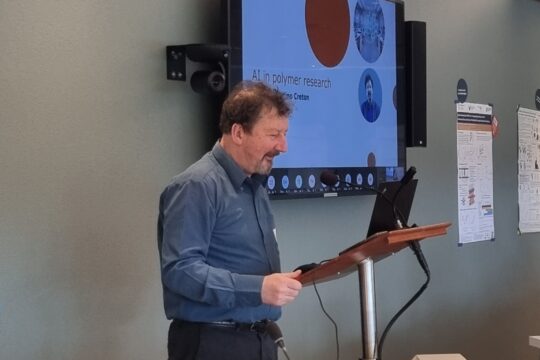
AI in polymer science: combining simulation and experiment for smarter research
PFAS-Free materials: opportunities and strategies for a sustainable shift
Questions or ideas?
Fill in the form and our programme manager will get back to you shortly.