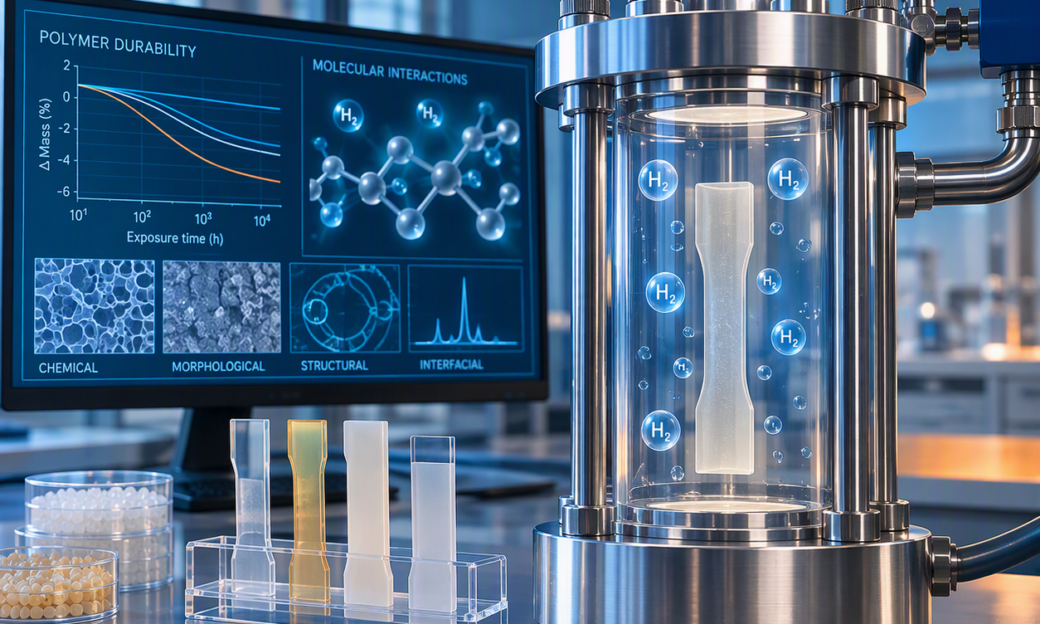
As hydrogen emerges as a critical vector in the energy transition, ensuring the long-term durability and safety of materials used in hydrogen infrastructure becomes paramount. The H2-DuraPol project addresses a key knowledge gap: how do polymeric materials, and composites, prolonged exposure to high-pressure hydrogen?
By simulating real-world conditions of hydrogen transport, this project aims to provide a scientific basis for developing materials and test protocols that stand the test of time.
Targeted testing: exposing materials to high-pressure hydrogen
The project focuses on subjecting polymers and polymer-reinforced systems to pure hydrogen gas at different pressures, temperatures, and ageing times. These materials will then undergo in-depth analysis, using chemical, morphological, and structural characterisation techniques. Special attention is given to changes at the polymer-reinforcement interface, a known weak point under mechanical and chemical stress.
Delivering insight: mechanisms, failure modes and test guidelines
H2-DuraPol will generate new insights into hydrogen-induced degradation processes in polymers, helping to identify critical failure modes and durability thresholds. This data will be essential for both researchers and industry when selecting or developing materials for hydrogen storage tanks, pipelines, and related infrastructure.
The project also aims to establish guidelines for reproducible, accelerated test methods that can serve as industry benchmarks.
Accelerating the hydrogen economy through material resilience
As hydrogen gains significant traction in energy systems across Europe and beyond, all materials involved in the transport and storage chain must perform safely and reliably under demanding conditions. H2-DuraPol contributes to the safe roll-out of hydrogen technologies by building a fundamental understanding of material ageing processes.
The project supports broader societal goals around clean energy, infrastructure resilience, and reduced emissions, particularly in transport and industrial sectors relying on hydrogen as an alternative to fossil fuels.
Connecting industry and academia to shape safe hydrogen solutions
DPI brings together industrial partners and academic experts to jointly investigate this pre-competitive topic under the Polymers for energy transition programme. By pooling resources and knowledge, the H2-DuraPol project benefits from a collaborative approach that combines industrial relevance with scientific rigour.
Questions or ideas?
Get in touch with our programme manager, or fill in the contact form, and we’ll get back to you shortly.

Denka Hristova-Bogaerds
Chief programme officer