Replacing PFAS in polymer applications is one of the biggest challenges facing the industry today. Yet, as Prof. Catarina Esteves highlighted at the DPI Spring Meeting 2026, it’s also an opportunity to innovate. While there are no direct chemical equivalents to drop into existing formulations, new materials and strategies are paving the way for sustainable solutions. The shift is inevitable, and collaboration is key to making it work.
The multi-functionality challenge
PFAS materials are renowned for their superior, multi-functional properties. To name a few: durability, resistance to heat, and chemical stability. As Prof. Esteves explained: “Multiple properties are needed for your products, and they have to happen simultaneously… There’s no direct chemical equivalent to replace PFAS in your formulations. You might have to compromise on one or more properties.”
For industries relying on PFAS – such as aerospace, electronics, or healthcare – this means no easy substitutes. Alternatives must meet the same high standards, often under extreme conditions where few materials perform as well.
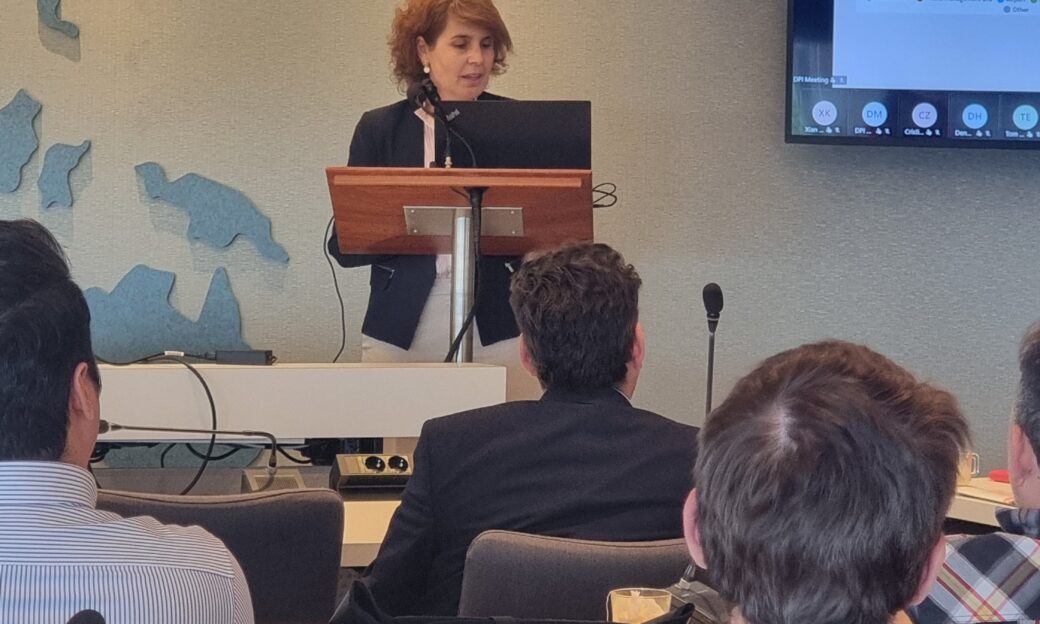
Prof. Esteves delivering her keynote at the DPI Spring Meeting 2026
The opportunity: strategies for PFAS-free materials
While the challenges are significant, solutions are emerging. Prof. Esteves’ research highlights several promising strategies to design PFAS-free interfaces:
- Alternative chemistries and molecular design: developing new, safer chemical structures that mimic PFAS performance.
- Self-healing materials: enhancing sustainability by extending material lifetimes.
- Higher performance with extended lifetime: combining durability with eco-friendly design.
- Chemistry and morphology/topography design: enhancing performance by optimising both chemical composition and physical structure.
As Prof. Esteves noted, “Good news: it is possible to reverse the problem. But we need to join forces and work together!”
Barriers to change
Even when alternatives exist, systemic challenges stand in the way:
- Embedded production processes: switching to PFAS-free materials often requires retooling entire manufacturing systems, a costly and time-consuming endeavour.
- Economic hurdles: the transition can be slow and expensive, with companies weighing short-term costs against long-term benefits.
- Regulatory pressures: compliance with evolving regulations adds another layer of complexity, as businesses must navigate functionality vs. sustainability trade-offs.
DPI community is collaborating for solutions
At DPI, our projects explore sustainable material innovations, bringing together industry and academia to tackle challenges like PFAS replacement. By fostering pre-competitive research, we help partners test alternatives, share knowledge, and co-develop solutions that balance performance with environmental responsibility. The insight created today becomes a building block for future materials and processes that meet both regulatory and industrial demands.
Join the conversation
How is your organisation addressing the PFAS challenge? Are you exploring green alternatives, self-healing materials, or other innovative strategies? Share your perspective and connect with DPI to collaborate on sustainable solutions.
Learn more about DPI’s programmes or contact us to discuss partnerships.