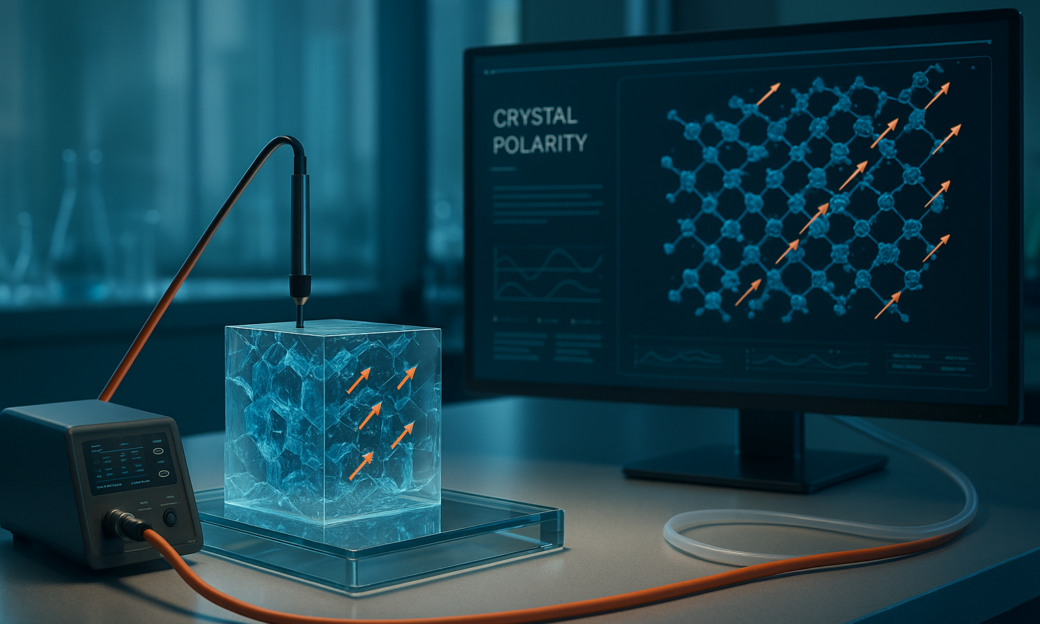
The shift towards electrification and sustainability demands more than just clean energy, it also requires greener materials. Traditional fossil-based plastics have long been the only go-to solution in electronics. The B-CRYSP project challenges this.
By exploring the unique structural asymmetry of biobased monomers, this project aims to harness crystal polarity as a tool to enhance electrical performance and safety. In doing so, B-CRYSP supports the development of advanced, sustainable plastic components for next-generation electronic systems.
Molecular design meets materials performance
At the core of B-CRYSP lies a deep scientific ambition: to understand and control the crystallisation behaviour of biobased polymers at the molecular level. The project aims to use the unique uneven nature of the biobased building blocks to introduce crystal polarity. This in turn would lead to increased electrical performance and safety of plastics in advanced and sustainable electronic systems.
This multiscale approach, from molecular architecture to macroscopic performance, aims to demonstrate the potential of biobased plastics in high-tech applications.
Potential insights and new directions
While the project is still underway, it is setting the stage for a new design paradigm: what are the best chemical pathways to follow, how to design the crystalline phase for the targeted performance. B-CRYSP paves the way toward targeted polymer design for electronics that demand both high-performance and low environmental impact.
Supporting the shift to sustainable electronics
The materials used in electronics, for example in smart phones, capacitors or electrical vehicles, must meet tough safety and performance standards, while also aligning with global sustainability goals.
B-CRYSP contributes to this transition by exploring viable alternatives to fossil-derived dielectric plastics. In doing so, it supports circular design and helps future-proof the electronics industry against rising regulatory and societal expectations.
B-CRYSP is part of DPI’s Sustainable polymers programme, where long-term research questions are tackled through industry-academic collaboration. DPI provides the trusted, pre-competitive setting where fundamental questions — like how to design crystal polarity into biobased plastics — can be explored with scientific depth and industrial relevance.
Building knowledge through community-led research
B-CRYSP is part of DPI’s Sustainable polymer materials programme, where long-term research questions are tackled through industry-academic collaboration. DPI provides the trusted, pre-competitive setting where fundamental questions — like how to design crystal polarity into biobased plastics — can be explored with scientific depth and industrial relevance.

Denka Hristova-Bogaerds
Chief programme officer
Questions or ideas?
Fill in the form and our programme manager will get back to you shortly.